12 Ganpati Pandals to Visit in Mumbai During Ganesh Chaturthi 2026
Because Ganpati season in Mumbai deserves more than just one pandal on your list
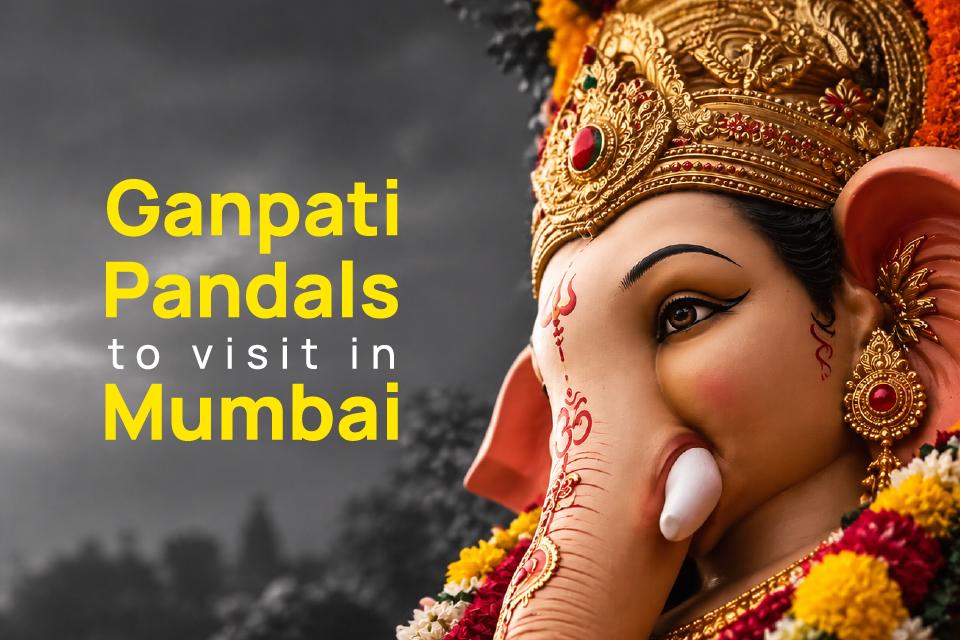
Experience the magic of Ganesh Chaturthi in Mumbai as we take you through 12 must-visit Ganpati pandals, from Lalbaug to Girgaon. Discover iconic idols, vibrant celebrations and unforgettable darshan. Chala, Bappachya darshan gheuya!
By Shreya Chopra
09 Sep, 2026
Growing up, we’ve all heard, “Stay rooted in our culture, no matter how modern you get.”
And who hasn’t watched Bal Ganesha or Oh My Friend Ganesha?
We all know why Ganesh Chaturthi is celebrated, but have you ever wondered how the tradition of public Ganpati celebrations became such a huge part of Mumbai?
The story takes us back to 1893, when Lokmanya Tilak popularised public Ganpati celebrations, or sarvajanik Ganeshotsav. What began as a way of bringing people together grew into an important part of Mumbai’s cultural identity. More than a century later, the city still comes alive with the same sense of devotion, community and celebration every year.
And honestly, there’s nothing quite like Ganesh Chaturthi in Mumbai.
For a few days, the usual Mumbai rush takes on a different character. Streets are decorated, dhols can be heard from a distance, neighbourhoods come together and thousands of devotees travel across the city for darshan.
Some come for the faith. Some come for the magnificent idols and pandal designs. Some come because it has been a family tradition for years.
And some of us are simply here for the entire experience, including the modaks.
So, let’s do the Shree Ganesha of this blog and explore 12 Ganpati pandals to visit in Mumbai in 2026.
Planning your trip around Ganesh Chaturthi 2026? Ganesh Chaturthi falls on 14 September 2026, while Anant Chaturdashi is on 25 September 2026. Individual mandals may follow different celebration and immersion schedules, so check their latest official updates before you head out.
Before you start: Siddhivinayak Temple
Siddhivinayak isn't a sarvajanik Ganpati pandal, but it's worth adding before you begin your pandal-hopping day. Located in Prabhadevi, it is one of Mumbai's best-known Ganesh temples and makes a natural spiritual first stop before heading towards the city's larger public celebrations.
Do check the official temple schedule before visiting, especially during Ganesh Chaturthi, as darshan arrangements can change.
1. Lalbaugcha Raja
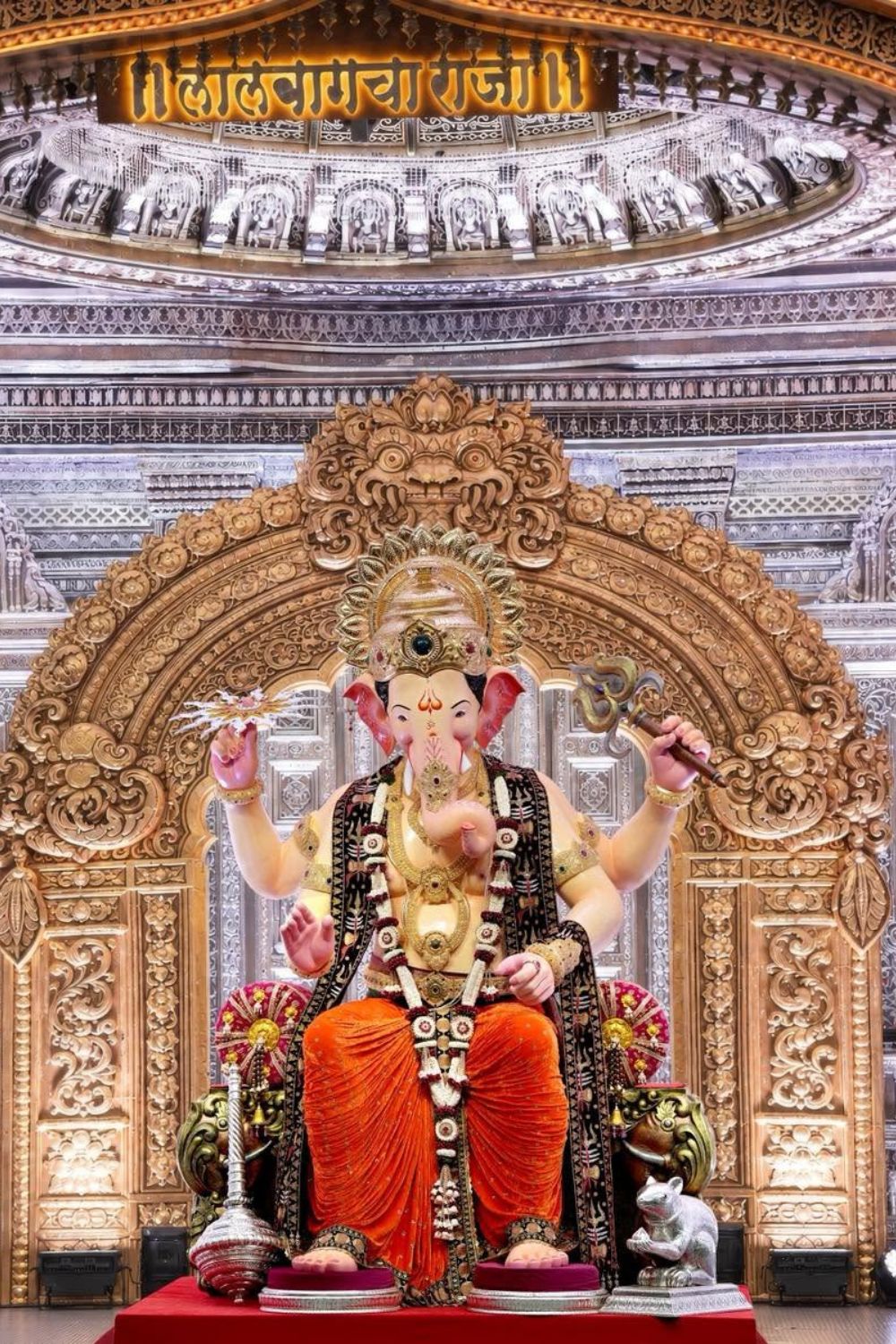
Let's start with the obvious one.
If you search for famous Ganpati pandals in Mumbai, Lalbaugcha Raja is almost impossible to miss. Established in 1934, it is one of the city's most recognised Ganpati celebrations and is popularly known as a Navsacha Ganpati — a Ganpati associated with the fulfilment of devotees' wishes.
And then there is the crowd.
The scale of devotion at Lalbaugcha Raja is something you really have to see for yourself. During Ganesh Chaturthi in Mumbai, devotees can spend hours waiting for darshan, particularly during the busiest days.
That might sound intimidating, but for many Mumbaikars, the wait has become part of the annual tradition.
The pandal is located on GD Ambekar Marg in Lalbaug and is conveniently placed near several railway stations, including Chinchpokli, Currey Road and Lower Parel. Current 2026 guides also highlight Lalbaugcha Raja as one of the city's essential festival stops.
Where: GD Ambekar Marg, Lalbaug
Best for: First-time visitors, devotees and anyone wanting to experience the full-scale Mumbai Ganpati atmosphere.
Our tip: Don't try to squeeze Lalbaugcha Raja into a 30-minute sightseeing stop. Give yourself time, patience and comfortable footwear.
2. Mumbaicha Raja, Ganesh Galli
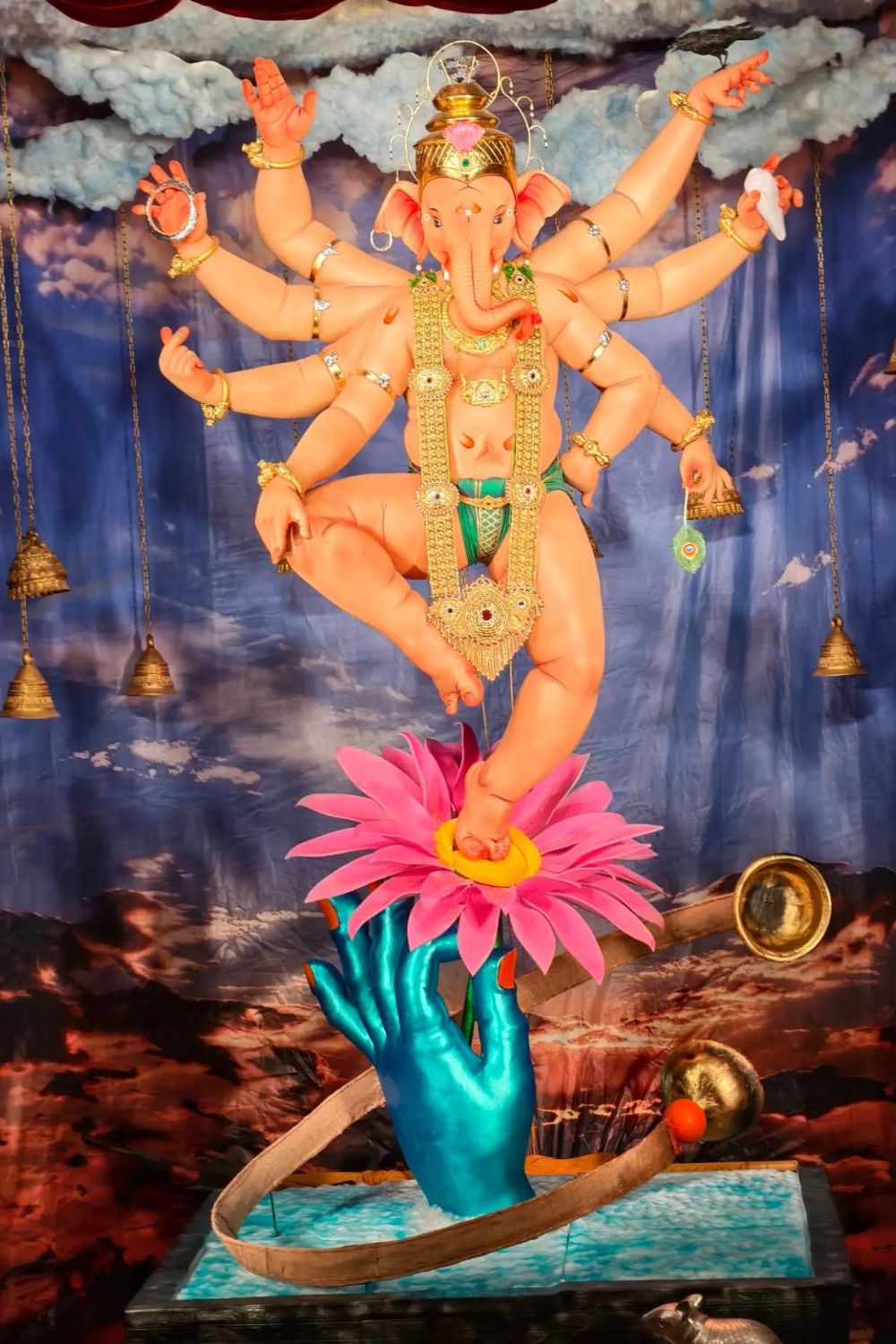
Just a short distance away, another major name awaits — Mumbaicha Raja in Ganesh Galli.
In fact, Mumbaicha Raja is older than Lalbaugcha Raja, having been established in 1928. Over the years, the mandal has become especially well known for its elaborate themes and beautifully designed pandals.
This is the kind of place where you don't just look at the idol. You stop and look around at the entire setup.
The pandal themes have traditionally drawn inspiration from famous temples, monuments and cultural landmarks, making Mumbaicha Raja a favourite among visitors who enjoy the artistic side of Ganpati celebrations in Mumbai.
And the best part? It is in the Lalbaug area, so you can combine it with several other major pandals rather than spending half your day travelling across Mumbai.
Where: Ganesh Galli, Lalbaug
Best for: Elaborate pandal designs, photography and first-time pandal hoppers.
Our tip: Visit Mumbaicha Raja and Lalbaugcha Raja on the same outing, but expect crowds around both.
3. GSB Seva Mandal, King's Circle
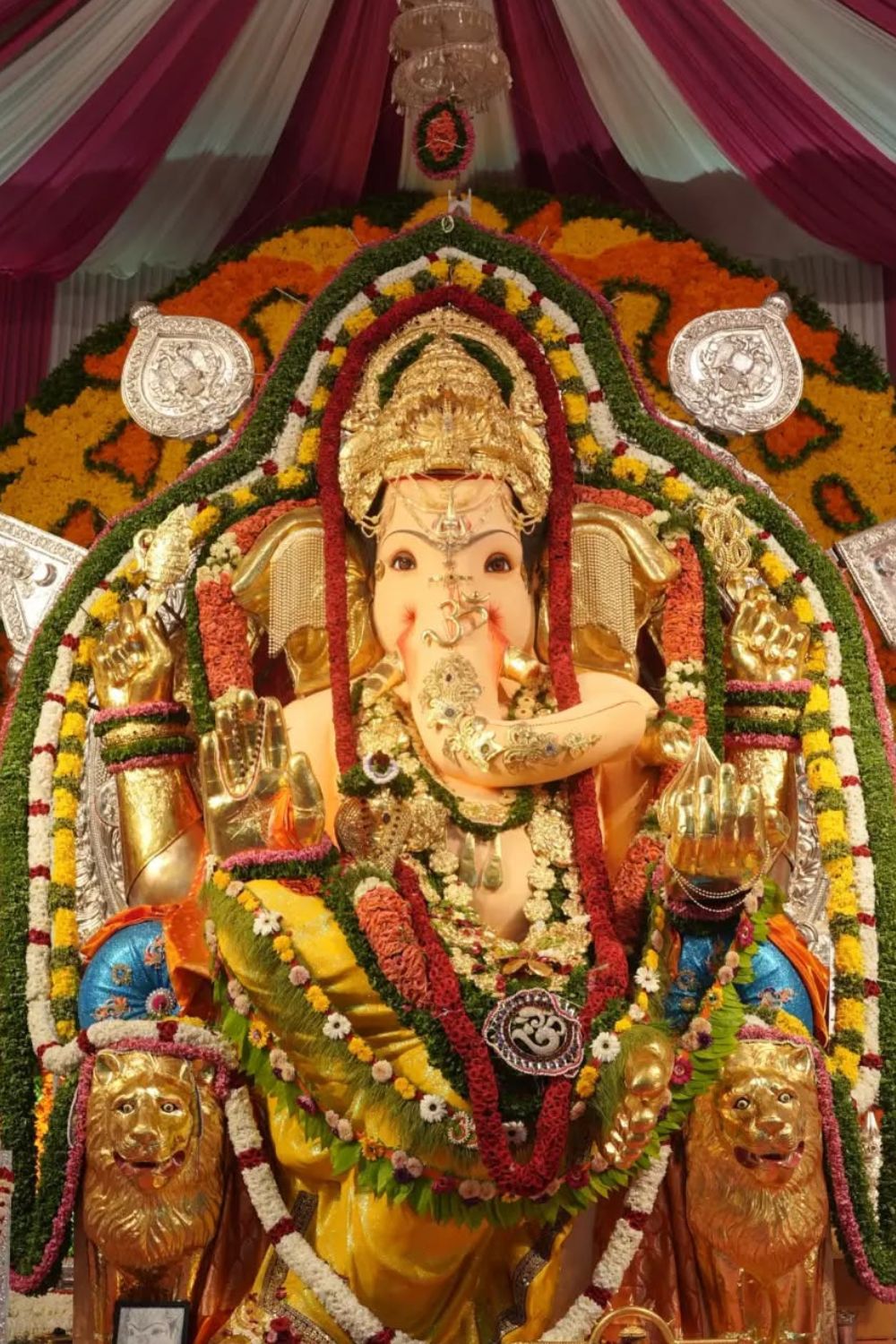
Next up is GSB Seva Mandal at King's Circle, and this one is in a league of its own.
You may have heard it described as one of the richest Ganpati idols in Mumbai. The Mahaganapati idol is lavishly adorned with gold and silver, but what makes GSB particularly special is the combination of that grandeur with traditional rituals and a deeply devotional atmosphere. The mandal itself says its Mahaganapati is decorated with more than 60 kg of gold and silver ornaments.
The celebration is associated with the Goud Saraswat Brahmin community and its traditional rituals.
And there is a very important 2026 detail: GSB Seva Mandal's 72nd Ganeshotsav runs from 14 to 18 September 2026.
So if GSB is on your list, don't leave it until the final days of the festival.
Where: Shree Sukriteendra Nagar, King's Circle
Best for: Devotees, traditional rituals, craftsmanship and the sheer grandeur of the idol.
Our tip: Check the mandal's official schedule before visiting, especially if you are planning your trip around a particular pooja or seva.
4. Andheri cha Raja
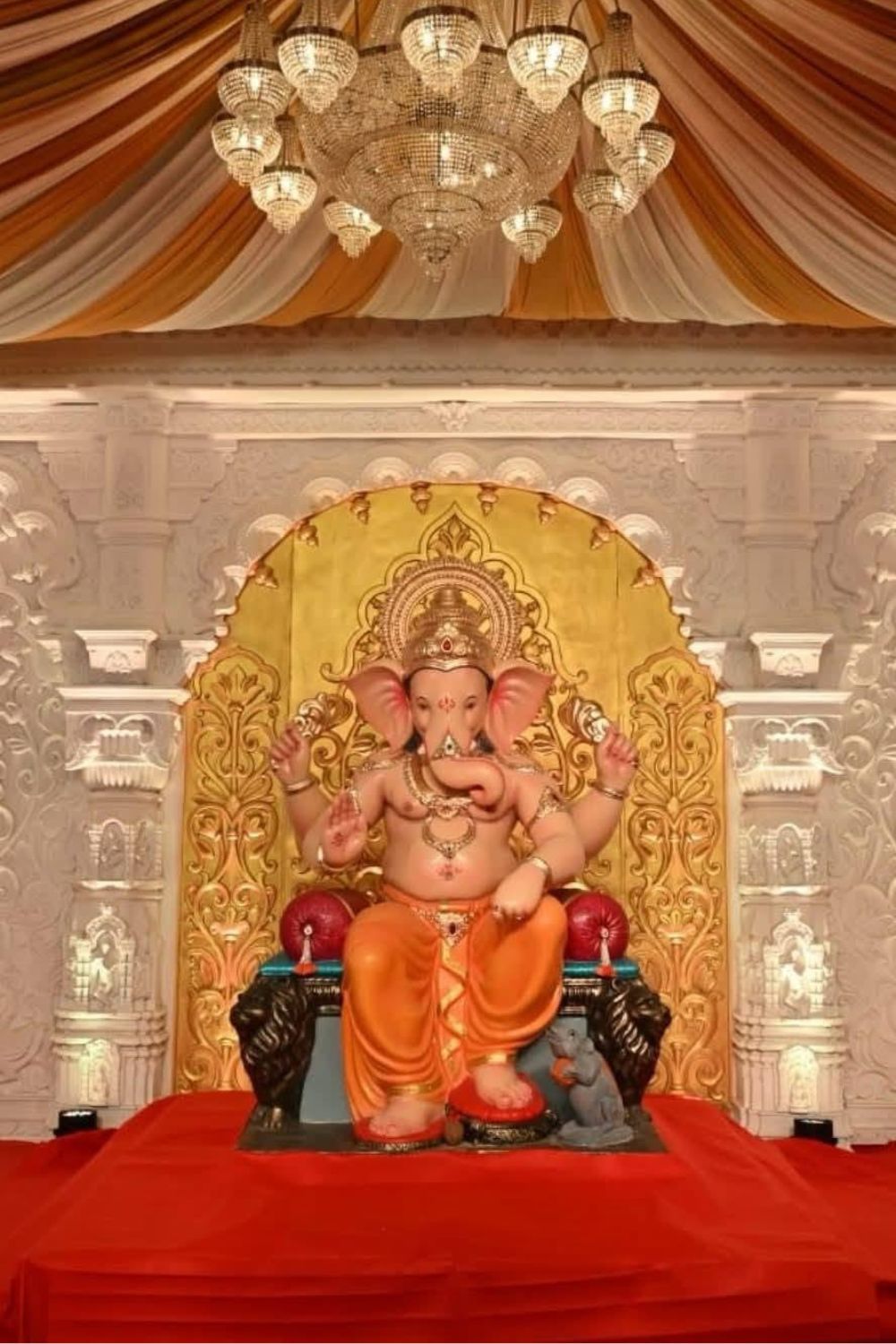
Think all the big names are concentrated in South Mumbai? Think again.
Andheri cha Raja is one of the best-known Ganpatis in Mumbai's western suburbs. Established in 1966 by workers who had moved from Lalbaug-Parel to Andheri, the celebration is a lovely example of how Mumbai's Ganeshotsav traditions travelled with the city's working communities.
Today, Andheri cha Raja is one of the biggest names on the western-suburbs Ganpati darshan in Mumbai circuit.
It also has a slightly different character from the Lalbaug giants. You still get the crowds, elaborate celebrations and festive energy, but the suburban setting gives it its own personality.
And yes, celebrity appearances are often part of the buzz around this pandal.
But don't go expecting a quiet visit.
Current 2026 guides continue to place Andhericha Raja among the city's must-visit pandals.
Where: Azad Nagar, Andheri West
Best for: Travellers staying in the western suburbs and anyone who wants to experience Mumbai's suburban Ganpati culture.
Our tip: Keep Andhericha Raja for a western-suburbs day rather than trying to combine it with a packed South Mumbai route.
5. Khetwadicha Ganraj
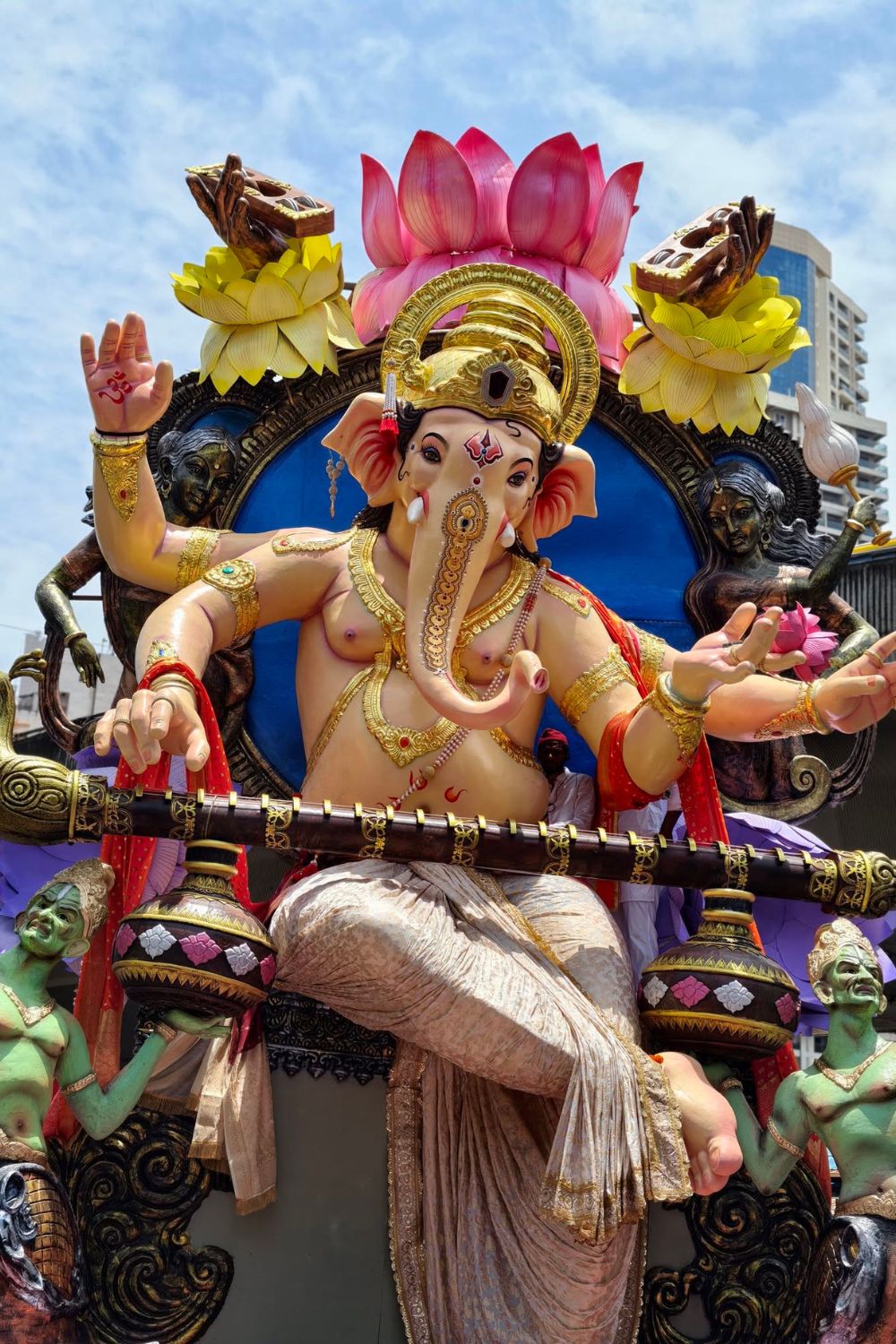
Now for one of the biggest attractions in Khetwadi.
Khetwadicha Ganraj is famous for its towering Ganpati idols and has become one of the most anticipated reveals of the Mumbai festival every year.
The mandal was established in 1959 and is particularly associated with the tradition of creating exceptionally tall idols. Its 40-foot idol in 2000 became a landmark moment in Mumbai's Ganeshotsav history.
But here's the thing about visiting Khetwadi: don't just come for one idol.
The entire neighbourhood is worth exploring.
The narrow lanes are packed with pandals and smaller celebrations, making Khetwadi one of the most enjoyable areas for Ganpati pandal hopping in Mumbai.
Where: Khetwadi 12th Lane, Girgaon
Best for: Giant idols, creative decorations and experiencing Mumbai's neighbourhood celebrations.
Our tip: Wear your most comfortable shoes. You'll be walking more than you expect.
6. Fortcha Icchapurti Raja, Fort
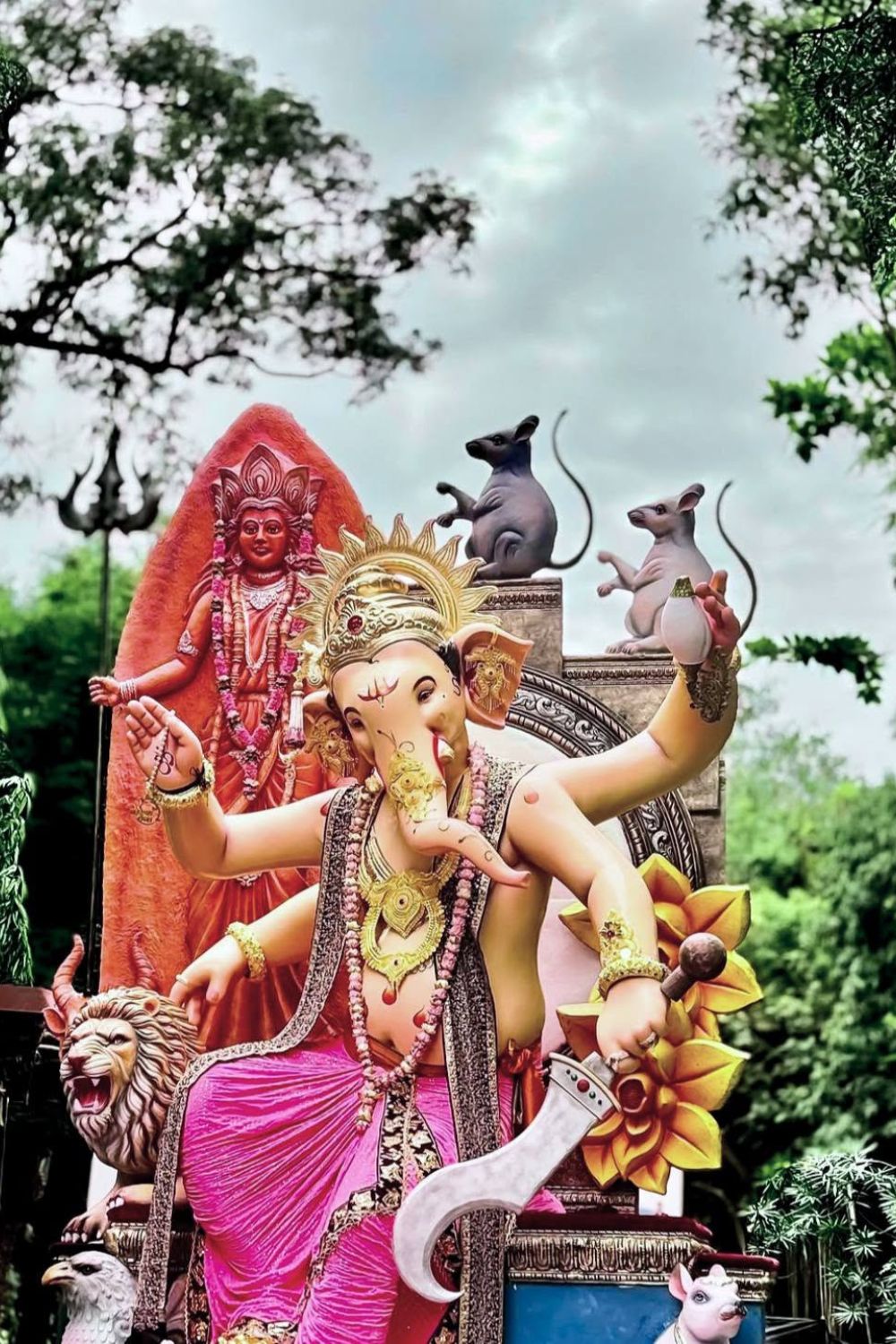
Now let's move towards Fort, where Ganeshotsav meets one of Mumbai's most recognisable heritage neighbourhoods.
Fortcha Raja, also called Icchapurti Ganpati, has been celebrating Ganesh Chaturthi in the Fort area since 1962. The mandal is known for its artistic pandals, with themes inspired by history, architecture and Indian culture.
And that's what makes this one particularly interesting for travellers. You're not just visiting a Ganpati pandal; you're experiencing the festival against the backdrop of Fort's heritage streets and architecture.
Where: Icchapurti Ganesh Chowk, Dr Sunderlal Bahal Path, Fort
Best for: Art, architecture, heritage and travellers exploring South Mumbai.
Our tip: Combine Fortcha Raja with a walk around Fort and Ballard Estate rather than making this a standalone stop.
7. Girgaon cha Raja
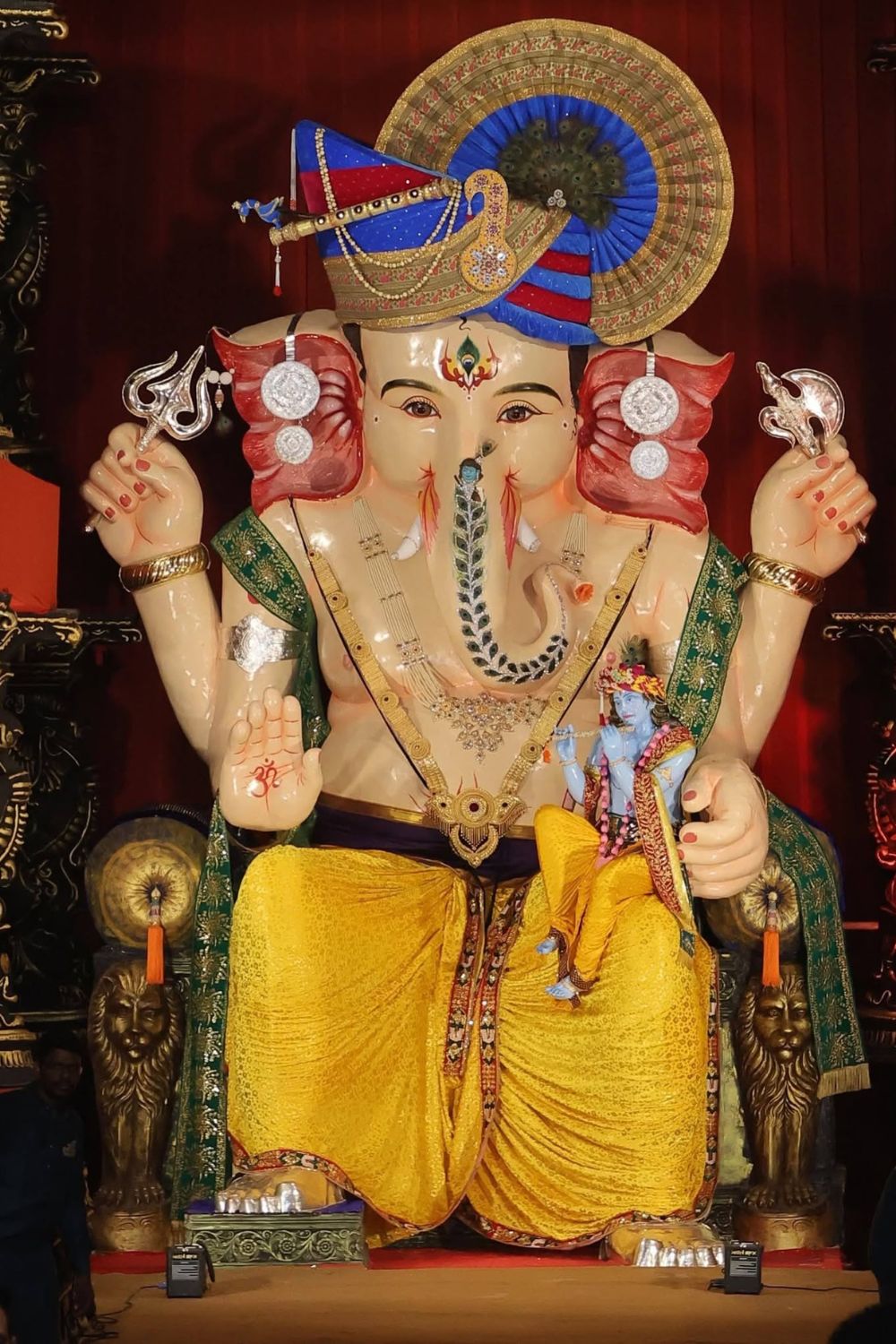
If you want to see a more traditional side of Ganesh Chaturthi in Mumbai, put Girgaoncha Raja on your list.
Located around Nikadwari Lane, this historic celebration dates back to 1928 and has become known for combining traditional devotion with a strong focus on environmentally conscious celebrations.
The surrounding Girgaon neighbourhood makes the experience even better. You get the pandal, the decorations and the crowds, but you also get to see a part of old Mumbai coming alive during Ganeshotsav.
Current 2026 guides continue to feature Girgaoncha Raja among the city's must-visit pandals.
Where: Nikadwari Lane, Girgaon
Best for: Traditional Mumbai, neighbourhood culture and eco-conscious celebrations.
Our tip: Visit Khetwadi and Girgaon cha Raja together. They're close enough to make a natural walking route.
8. Chinchpokli cha Chintamani
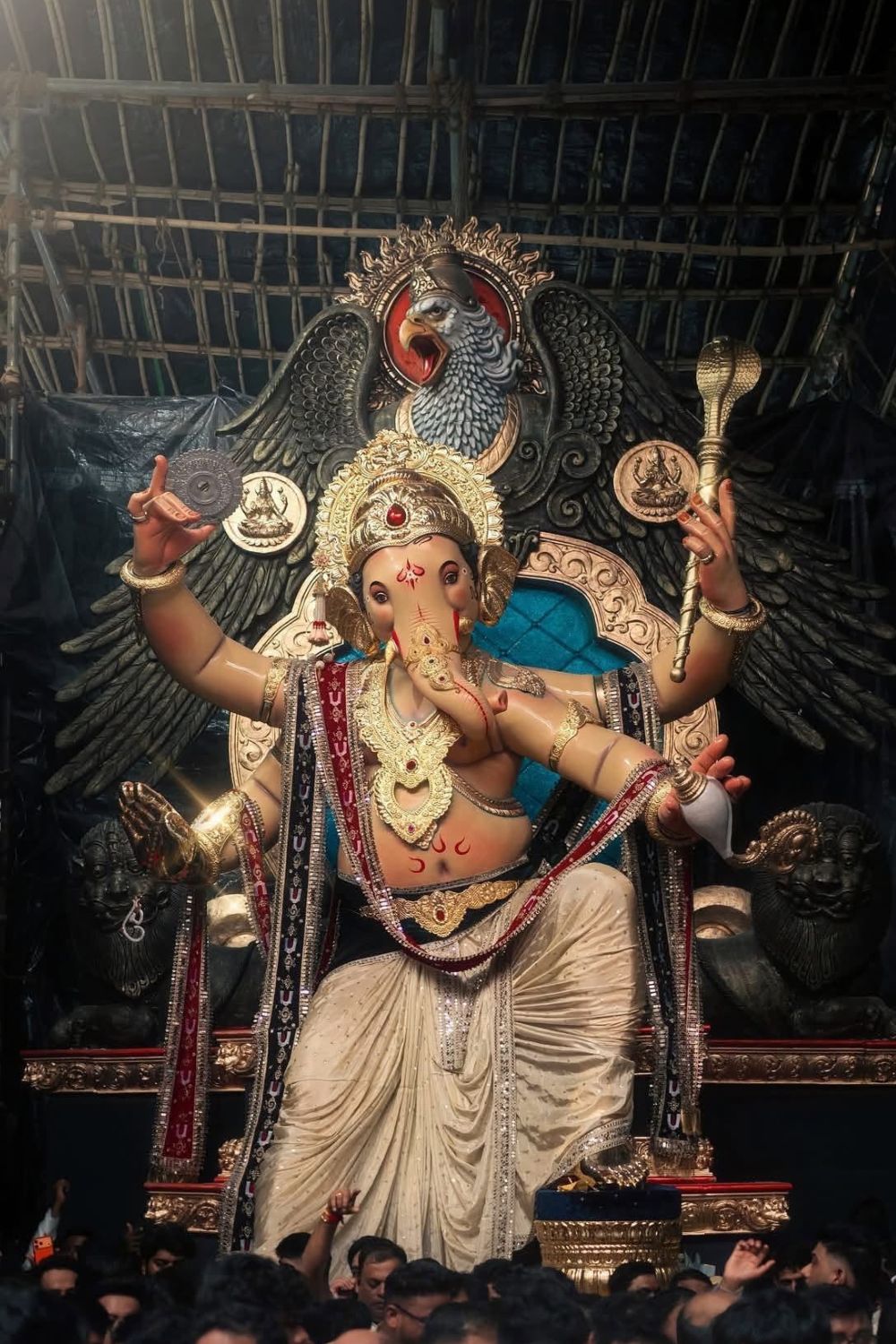
Some of the best Ganpati pandals in Mumbai are not necessarily the ones with the loudest publicity.
One of Mumbai's long-standing public Ganpati celebrations, Chinchpoklicha Chintamani has strong local roots and is known for its large-scale festive atmosphere.
The pandal is particularly interesting for first-time visitors because it gives you a glimpse of how deeply Ganeshotsav is tied to neighbourhood identity in Mumbai.
And if you're already visiting Lalbaugcha Raja and Mumbai cha Raja, it makes complete geographical sense to add Chinchpokli to the same route.
Current 2026 guides continue to include Chinchpoklicha Chintamani among the city's major Ganpati destinations.
Where: Chinchpokli
Best for: Festival atmosphere, history and a strong local-community experience.
Our tip: Check crowd conditions before travelling and avoid assuming that old timings from previous years still apply.
9. Parel cha Raja
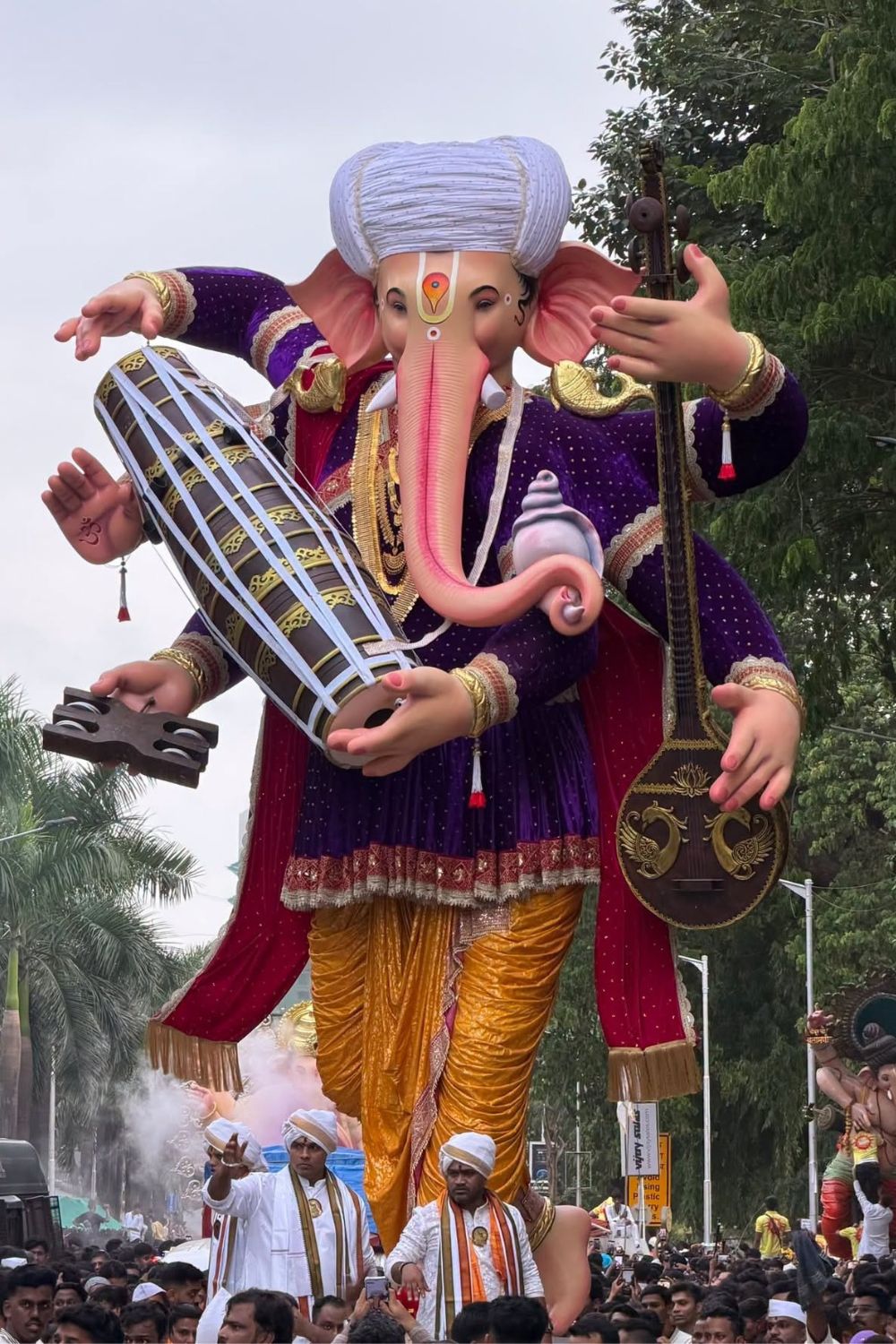
Mumbai's Ganeshotsav cannot really be separated from the city's mill and working-class history, and Parel cha Raja is an interesting part of that story.
Located at Nare Park, Parel, this long-running celebration is closely connected with the neighbourhood's cultural identity.
The idol itself is distinctive too. While many famous Mumbai Ganpatis are seated, Parel cha Raja is known for its standing form.
It may seem like a small detail, but these differences are exactly what make Mumbai Ganpati so interesting. Every mandal has its own style, history and relationship with the neighbourhood around it.
Current 2026 pandal guides include Parel cha Raja in the city's major festival circuit.
Where: Nare Park, Parel
Best for: Travellers interested in Mumbai's heritage and less predictable Ganpati experiences.
10. Tejukaya cha Raja
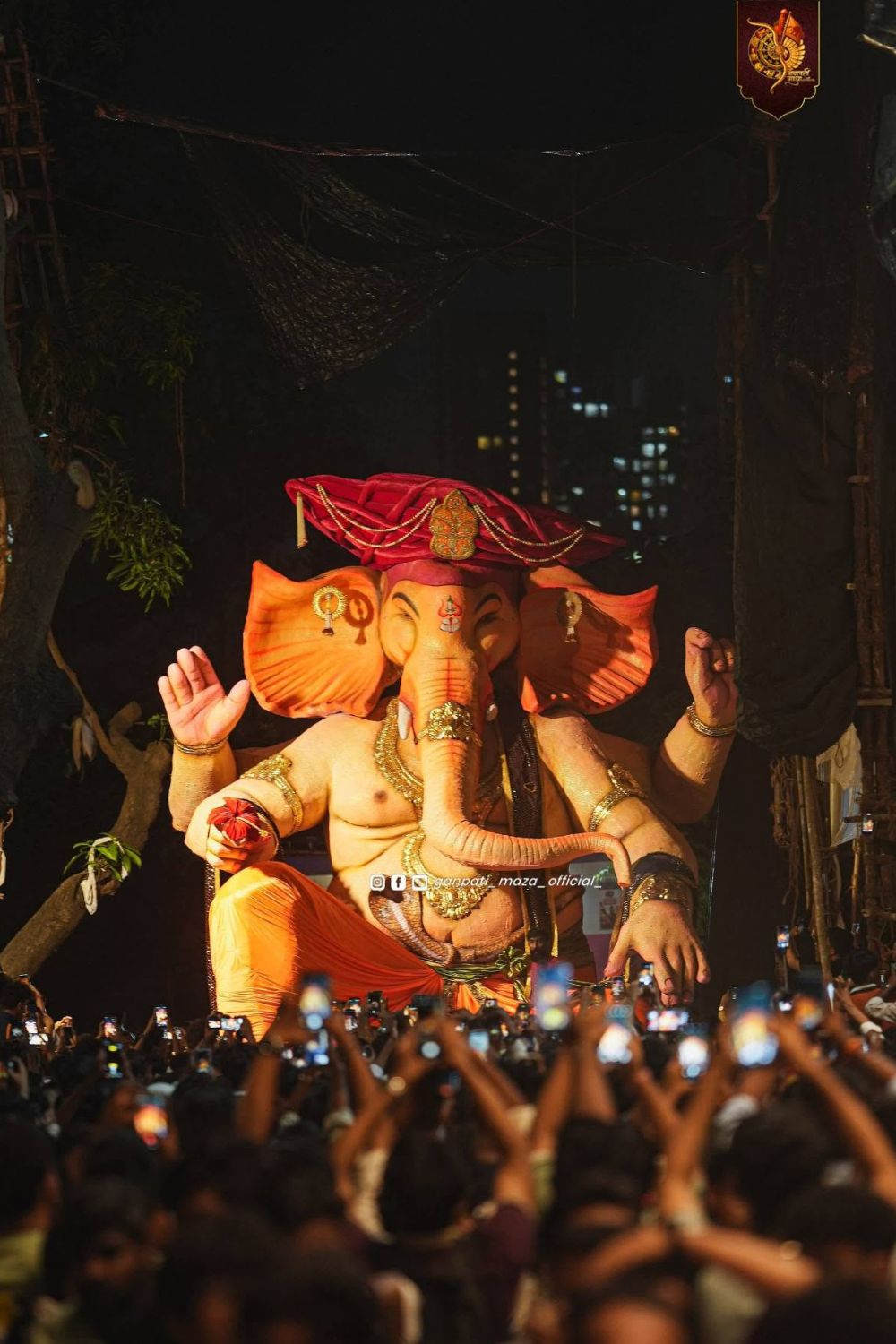
Here's one that's very easy to include in your Lalbaug route.
Tejukaya cha Raja is located close to Lalbaugcha Raja and is known for its distinctive idol.
It is also a practical stop for visitors who want to add another well-known Ganpati to their day without crossing the city. Current 2026 guides continue to feature it among Mumbai's major pandal destinations.
So, if you're building your first Ganpati pandal hopping route, this is a sensible one to add.
Where: Lalbaug area
Best for: A convenient addition to your Lalbaug route and visitors who want to see multiple Ganpatis in one outing.
Our tip: Pair it with Mumbaicha Raja, Lalbaugcha Raja and Chinchpoklicha Chintamani.
11. Mumbai cha Peshwa, Vile Parle
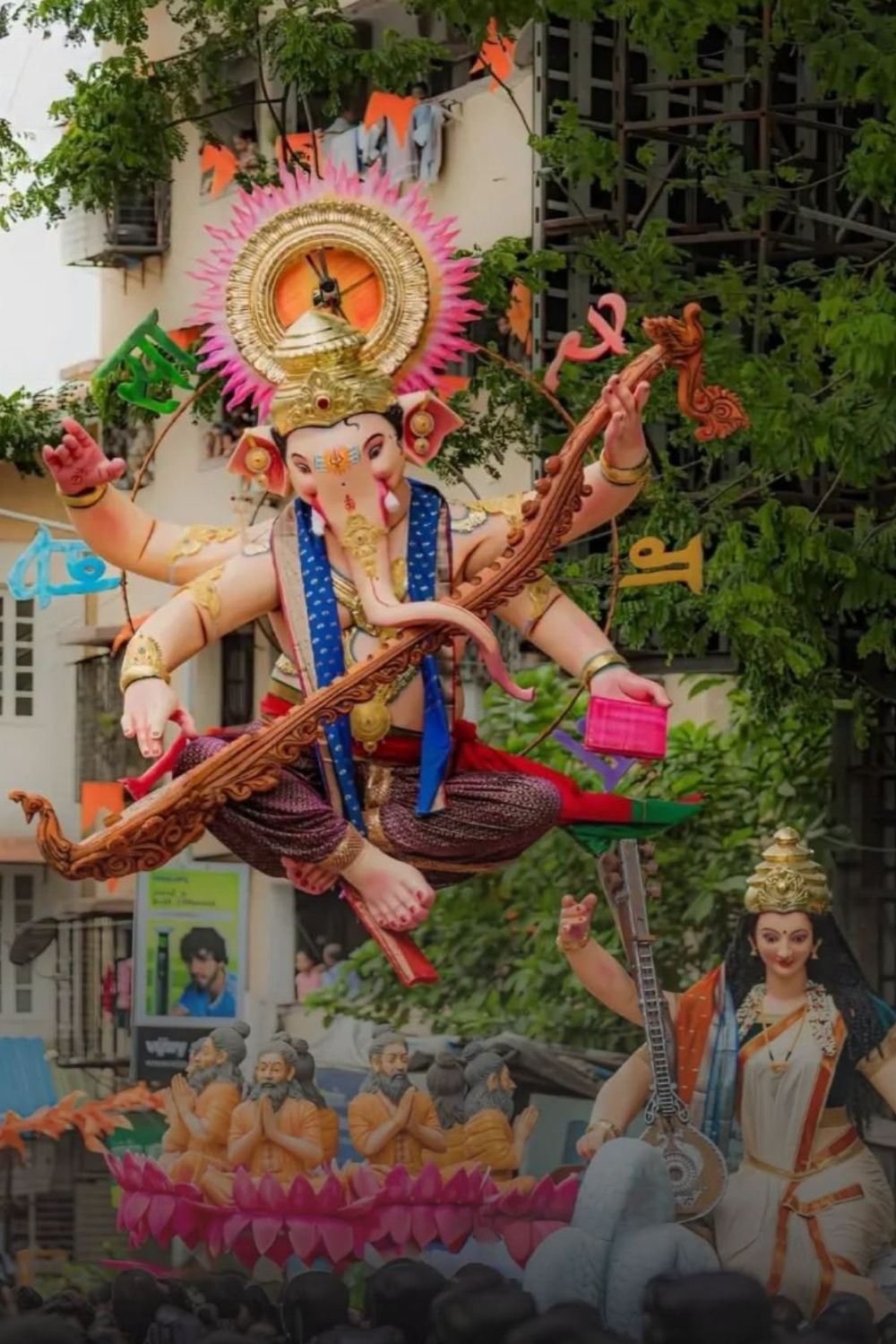
Mumbai's Ganpati story doesn't end in South Mumbai.
Head to Vile Parle and you'll find Mumbaicha Peshwa, one of the more distinctive celebrations in the western suburbs.
Mumbaicha Peshwa was founded in 1989 and has become known for its regal Maratha-inspired celebrations. Since 2008, the mandal has been associated with paper Ganpati idols, giving it a distinctive craftsmanship and sustainability angle.
For travellers staying in Andheri, Vile Parle or around Mumbai's airport, this can be a particularly convenient addition to a Ganesh Chaturthi Mumbai itinerary.
Where: Vile Parle East
Best for: Western-suburbs visitors, eco-friendly craftsmanship and something beyond the usual Lalbaug circuit.
Our tip: Pair this with Andhericha Raja if you're planning a western-suburbs Ganpati day.
12. Colaba cha Samrat
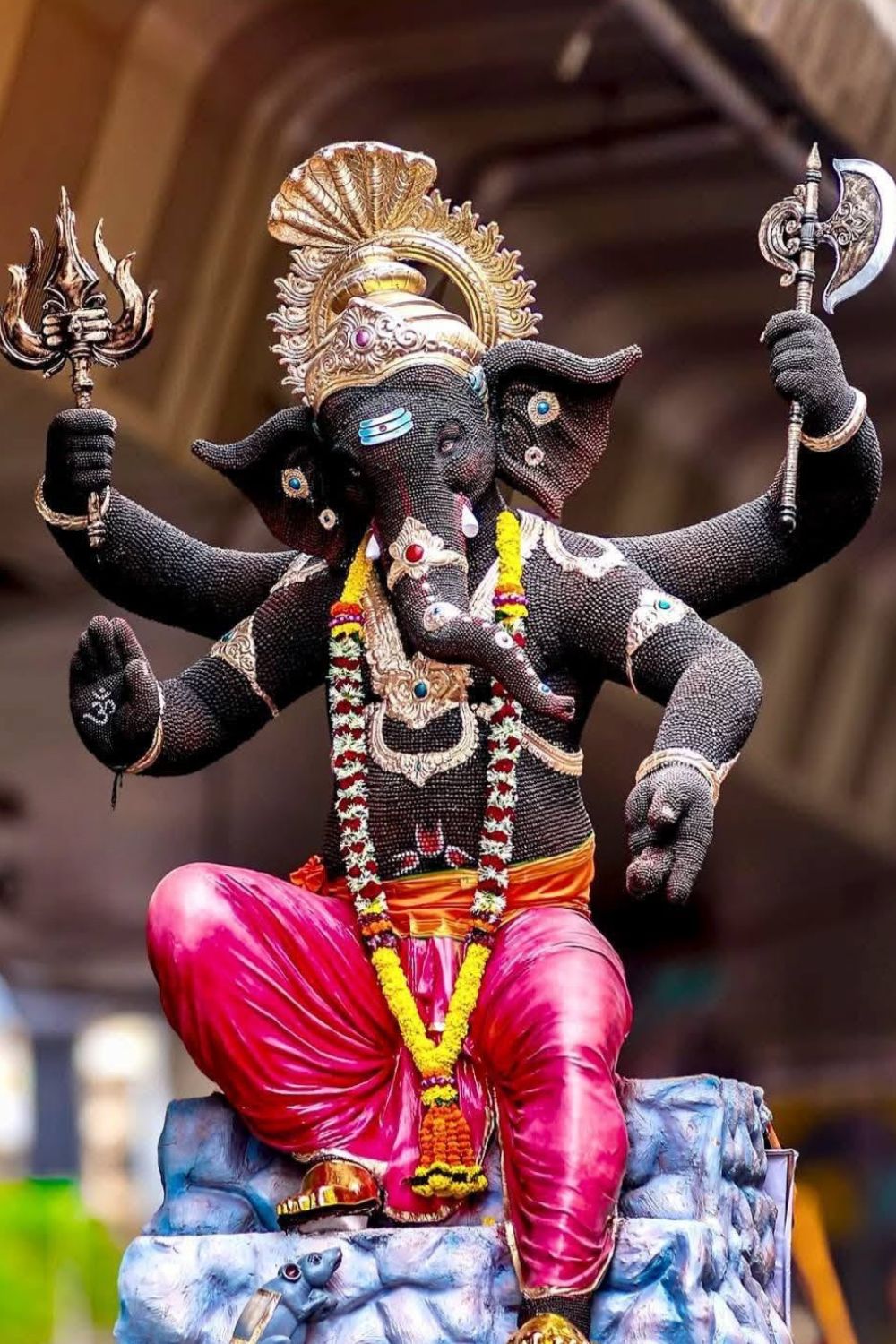
And finally, let's take this celebration all the way down to Colaba.
Colaba Cha Samrat is one of South Mumbai's notable neighbourhood Ganpatis and has been welcoming devotees since 1993. Current 2026 coverage includes it among the city's must-visit pandals.
What makes this one especially useful for visitors is its location.
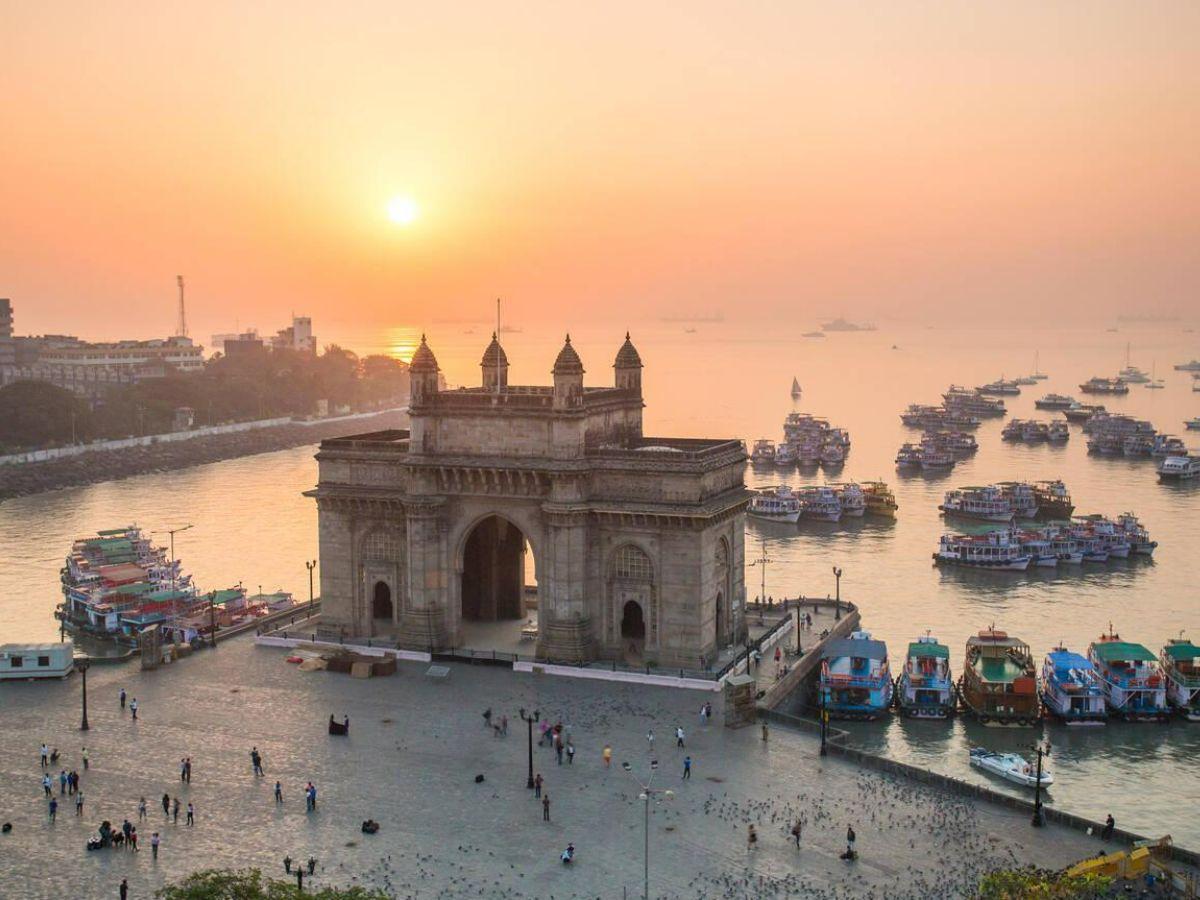
You can combine darshan with a day exploring Colaba, the Gateway of India area and the surrounding heritage streets.
So yes, you get your Ganpati darshan, and a little sightseeing while you're at it.
Where: 2nd Pasta Lane, Shahid Bhagat Singh Road, Colaba
Best for: Travellers exploring South Mumbai and anyone who wants to combine Ganpati with sightseeing.
Our tip: Make this part of a full South Mumbai day rather than travelling all the way to Colaba just for a quick darshan.
How to plan Ganpati pandal hopping in Mumbai
Trying to cover all 12 in one day? We admire the enthusiasm. But we wouldn't recommend it.
Mumbai during Ganesh Chaturthi is busy enough without spending your entire day travelling from one end of the city to another. The smarter way to experience the Ganpati pandals to visit in Mumbai in 2026 is to plan by neighbourhood.
1. Lalbaug–Parel route
This is the obvious starting point for first-time visitors.
You can group:
Lalbaug cha Raja → Mumbai cha Raja → Tejukaya cha Raja → Chinchpokli cha Chintamani → Parel cha Raja
Several major pandals are located within this broader belt, making it one of the city's easiest areas for pandal hopping.
2. Khetwadi–Girgaon route
Next, explore:
Khetwadi cha Ganraj → Girgaon cha Raja
This route is perfect for travellers who want to explore the neighbourhood and see several celebrated mandals without constantly catching trains or cabs.
3. Western suburbs route
Keep:
Andheri cha Raja → Mumbai cha Peshwa
for a separate western-suburbs outing.
4. Fort–Colaba route
For a slower day around South Mumbai:
Fortcha Raja → Colabacha Samrat
works well, especially if you want to mix Ganpati darshan with sightseeing.
5. King's Circle
Give GSB Seva Mandal its own slot, particularly because its festival schedule differs from many other major mandals.
Best Time to Visit Ganpati Pandals in Mumbai 2026
Wondering about the best time to visit Ganpati pandals in Mumbai 2026? There isn't one magic hour that guarantees short queues everywhere. The major pandals can be busy even in the morning, while crowd levels change with the day, weekend traffic, special rituals and local arrangements.
So, when should you go?
| Time | What you can expect | Best suited for |
|---|---|---|
| 5 AM - 7 AM | Quieter streets and a better chance of getting an early darshan | Devotees, photographers and visitors trying to avoid peak crowds |
| 7 AM - 10 AM | A good mix of manageable crowds and daytime visibility | Most first-time visitors |
| 10 AM - 1 PM | Crowds can gradually build at popular pandals | Flexible itineraries and neighbourhood exploration |
| 1 PM - 5 PM | Crowd levels vary considerably by location and day | Visitors checking individual mandal timings |
| 5 PM - 10 PM | Maximum festive energy, but generally busier at famous pandals | Anyone who wants the full Mumbai Ganpati atmosphere |
| After 10 PM | Some major celebrations may remain active, but access and timings differ | Visitors looking for a late-night darshan experience |
For most travellers, we'd pick around 8 AM–11 AM on a weekday. It gives you an early enough start without requiring a 5 AM alarm, while still leaving the rest of the day for pandal hopping.
If shorter queues are your main priority, start earlier. If you want to see Mumbai at its most energetic, go in the evening, just expect more people.
One more thing: don't assume every mandal follows the same timetable. GSB Seva Mandal's 2026 celebrations, for example, run only from 14 to 18 September.
Always check the individual mandal's latest official update before leaving, especially for darshan arrangements, route changes and immersion schedules.
Ganesh Chaturthi 2026 in Mumbai: Dates to know
Planning your trip around Ganesh Chaturthi 2026 Mumbai? Here's the date you need to remember:
Ganesh Chaturthi: 14 September 2026
Anant Chaturdashi: 25 September 2026
These are the main festival dates, but individual mandals can follow different immersion schedules. For example, GSB Seva Mandal's 2026 celebrations run from 14 to 18 September.
So before planning your pandal route, check the schedule of the specific Ganpati you want to visit.
Tips for your first Ganpati darshan in Mumbai
- Wear comfortable shoes. Seriously! You're likely to walk much more than you planned.
- Travel light. Especially around the busiest pandals, and keep your valuables secure in crowded areas.
- Use local trains and Metro services wherever practical. Driving directly to the biggest pandals can be frustrating during peak periods.
- Don't rely on last year's timings. Festival arrangements, access routes and queues can change from one year to the next.
- And one more thing: remember that these are places of worship and community celebrations. Give devotees space, don't block entrances for photographs and be respectful when photographing people.
Basically, enjoy the festival without becoming that tourist.
Mumbai's Ganpati magic awaits
Ganesh Chaturthi in Mumbai is more than a festival on the calendar.
It's the city changing its rhythm for a few days.
It's families heading out together for darshan. It's neighbourhoods competing, sometimes very seriously, over who can create the most spectacular pandal. It's the sound of drums somewhere around the corner. It's standing in a queue with strangers and somehow feeling part of the same celebration.
And yes, it's also the perfect excuse to eat one more modak.
Whether you come for Lalbaugcha Raja, the artistry of Mumbaicha Raja, the traditions of GSB Seva Mandal, the energy of Andhericha Raja, the heritage setting of Fortcha Raja, or simply to wander through Mumbai's neighbourhoods during Ganeshotsav, you're going to see a side of the city that photographs really don't do justice to.
So, wear comfortable shoes, keep your patience handy and let the city lead the way.
Ganpati Bappa Morya!
And when the day's pandal hopping is done, head back to a comfortable budget stay in Mumbai, recharge and do it all over again.
Because Bappa may leave after the festival, but Mumbai's stories don't!
FAQs






thehosteller